This older documentary is really eye opening (for me) on some issues. Watch and enjoy!
Category: Book of Common Prayer
BCP and fasting?
I asked this on FB so …
For those in the know (you know who you are): with the revision of the Prayer Book, what is the canonical standing of the “Tables and Rules for the Feasts and Fasts through the whole Year”?
Is an Anglican to keep these fasts?
There is an ascetic system enshrined in BCP (1662) – a discipleship way. But I have never heard anyone speak of it?
The Religious Societies of the seventeenth century offer most practical and important witness. Associated with Anthony Horneck’s ministry at the Savoy Chapel, London, and later with William Beveridge and Robert Nelson, these societies arose as an attempt – and a successful one – to practise the full teaching of the Church as enshrined in the Book of Common Prayer. The initial influence of these societies, these “Faithful Remnants”, was enormous, and history supports their sanity and zeal. The recitation of the daily Office was central to their activity, a priest-director was an essential part of the system, while works of charity towards the poor were a natural outcome. It is significant that their demise came when extraneous interests in politics and sociology overbalance the original Godward intention. For most of our modern parochial organizations, the writing on the wall could hardly be plainer.
English Spirituality
what has happened …
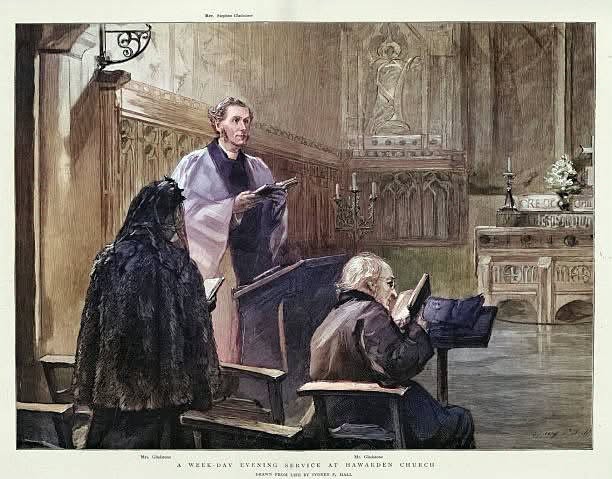
What happened to Mattins and Evensong? I am meeting Anglicans who have never attended either service. Or, who have only attended the modern version (euphemistically called Morning Prayer with little connection to the traditional shape). The modern church (oh, how I hate that term) is so quick to jump to “saying Mass” with traditional prayer services being an afterthought.
And what happened to “priest and people” together praying? Active participation means we have laypeople doing clergy jobs, and clergy dominating laypeople in their vocation.
And what has happened to fasting?
Companion of New Skete
I am not a joiner! I did not join the “normal Anglo-Catholic” societies when I was a priest, nor any religious order as an oblate etc. But ….

It is intrinsic to ascetical theology to adapt itself to the contemporary situation, yet it can only evolve out of a living tradition with roots in the past.
English Spirituality, 13
I have been accepted as a Companion of the New Skete. And I am super excited. A connection to a living tradition while I remain within my own tradition. The beginning of a Prayer Book Ascetic.
monkerie
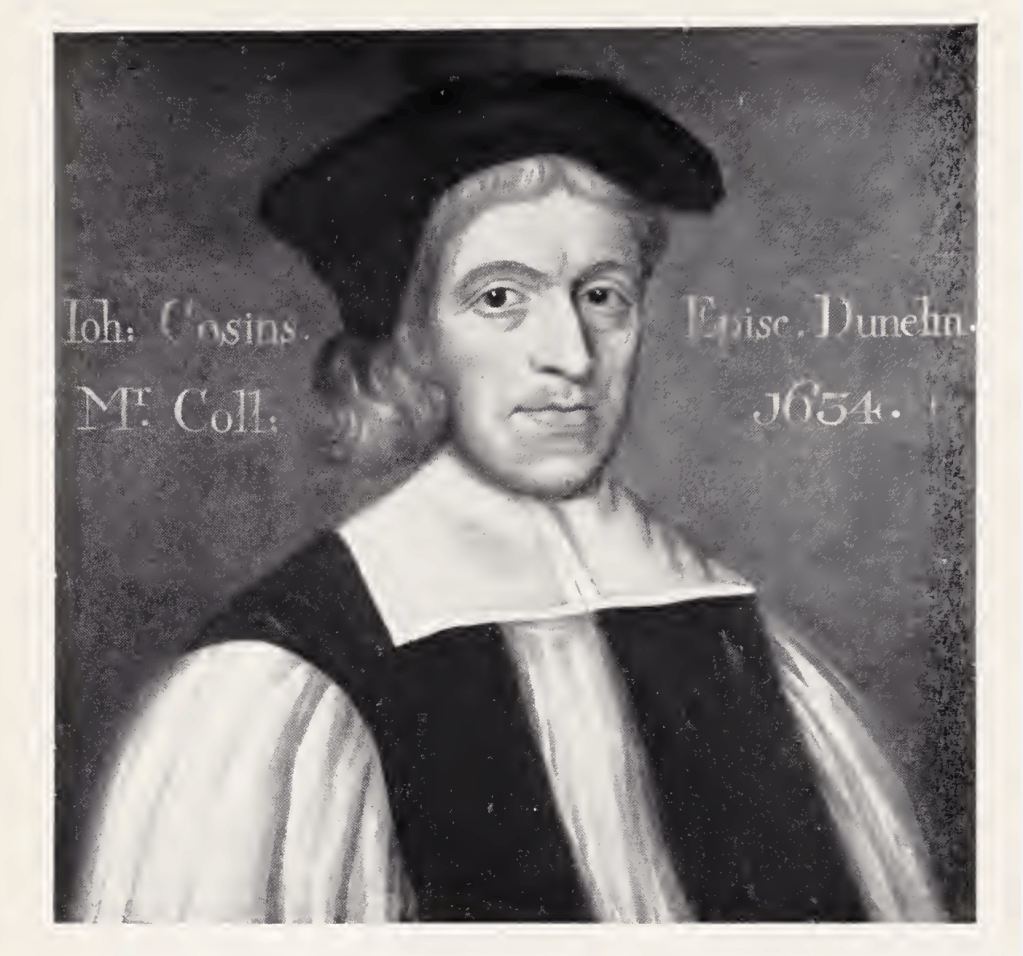
Cosin’s Primer, on the other hand, appearing unexpectedly and subversively in ‘our aged and noontide seasons of the Gospel’, was no less than a step on the way back to Popery, the provision for the observance of the canonical hours importing nothing else ‘but a necessitie of bringing in Monkerie and so of erecting cells again’
Introduction in JOHN COSIN, A Collection of Private “Devotions”
“Faithful Remnants”
The Religious Societies of the seventeenth century offer most practical and important witness. Associated with Anthony Horneck’s ministry at the Savoy Chapel, London, and later with William Beveridge and Robert Nelson, these societies arose as an attempt – and a successful one – to practise the full teaching of the Church as enshrined in the Book of Common Prayer. The initial influence of these societies, these “Faithful Remnants”, was enormous, and history supports their sanity and zeal. The recitation of the daily Office was central to their activity, a priest-director was an essential part of the system, while works of charity towards the poor were a natural outcome. It is significant that their demise came when extraneous interests in politics and sociology overbalance the original Godward intention. For most of our modern parochial organizations, the writing on the wall could hardly be plainer.
English Spirituality, 266
canonical hours
Bishop Cosin wished to define the hours at which it was to be said within certain limits, by adding to “a convenient time before he begin,” “which may be any hour between six and ten of the clock in the morning, or between two and six of the clock in the evening” and although his alteration was not adopted, it serves to show us what were then considered the canonical limits of the times for Mattins and Evensong.
Annotated Prayer Book, 20
Falling Asleep of B.V.M. Aug. 15
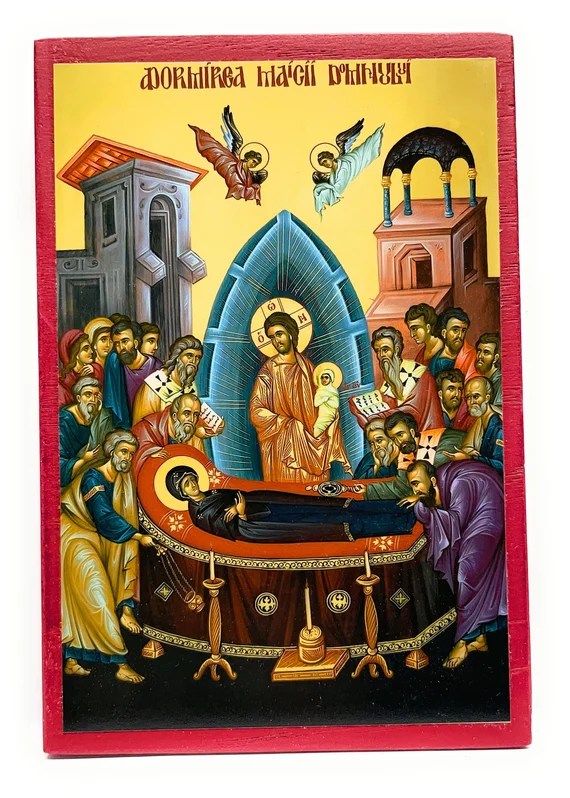
Collect. (Green Book)
GRANT, we beseech thee, Almighty God, that we, who here observe the heavenly birthday of the Mother of thy Son Jesus Christ our Lord, may in such wise rejoice in her yearly festival, that we may learn to follow rightly the example of her devotion; through the samc thy Son. Jesus Christ our Lord, who liveth and reigneth with thee in the unity of the Holy Ghost, ever one God, world without end. Amen.
First Evensong: Cant 2:1-5 & Rev 12:1-6
Mattins: Cant 2:1-6 & Luke 11:27-28
Second Evensong: Cant 2:10-17 & Luke 1:41-45
Collect (Western Rite)
WE beseech thee, O Lord, let us be continually aided by the sacred feast. of this day, whereon the holy Mother of God underwent death in this world, and yet could not be holden by the chains of death: who did bring forth thy Son our Lord. Who liveth.
Heritage Edition
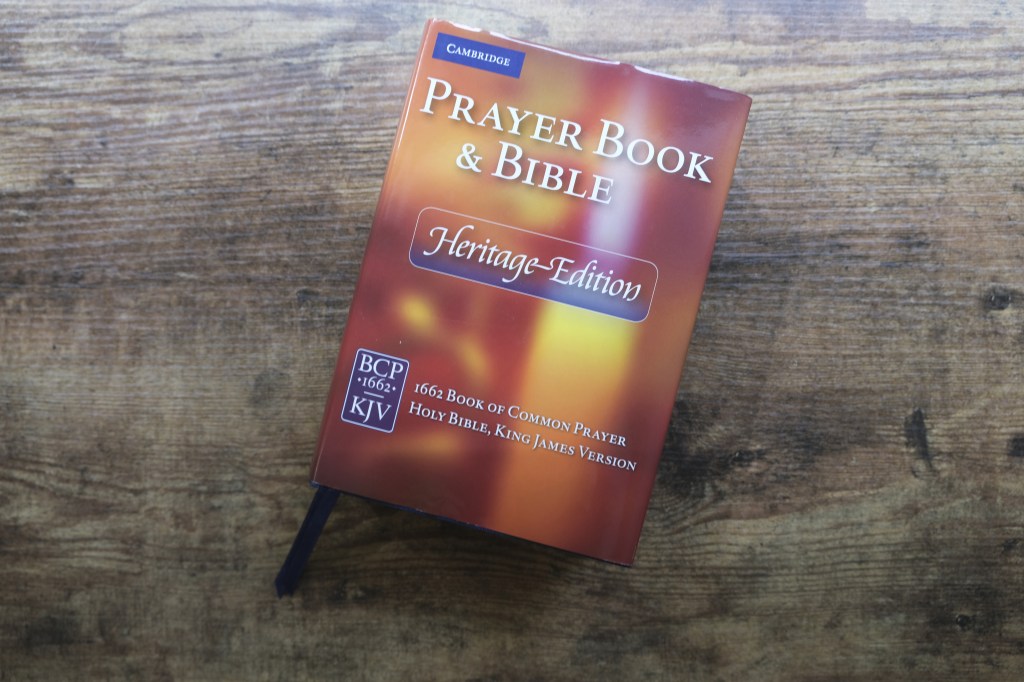
I purchased a Heritage Edition Prayer Book and Bible. (Like I need more BCPs and KJVs, and, yes, for my birthday). This is one of the best starter BCPs – with KJV! I like that I can take just one book everywhere. All I need is here. Very nice size! The KJV font is a little small but I can read when I remember to put on my glasses.
Yes, I have a 1928 Deposited Book (and it has been my constant companion). But this might be better!!! Very nice hand-feel!!! And the cost is a quarter of the 1928 with 1922 Lectionary.
BCP Online
FB find (via a group so thank you!):

The best I have seen!!!! Section on Fasts is excellent, methinks.

