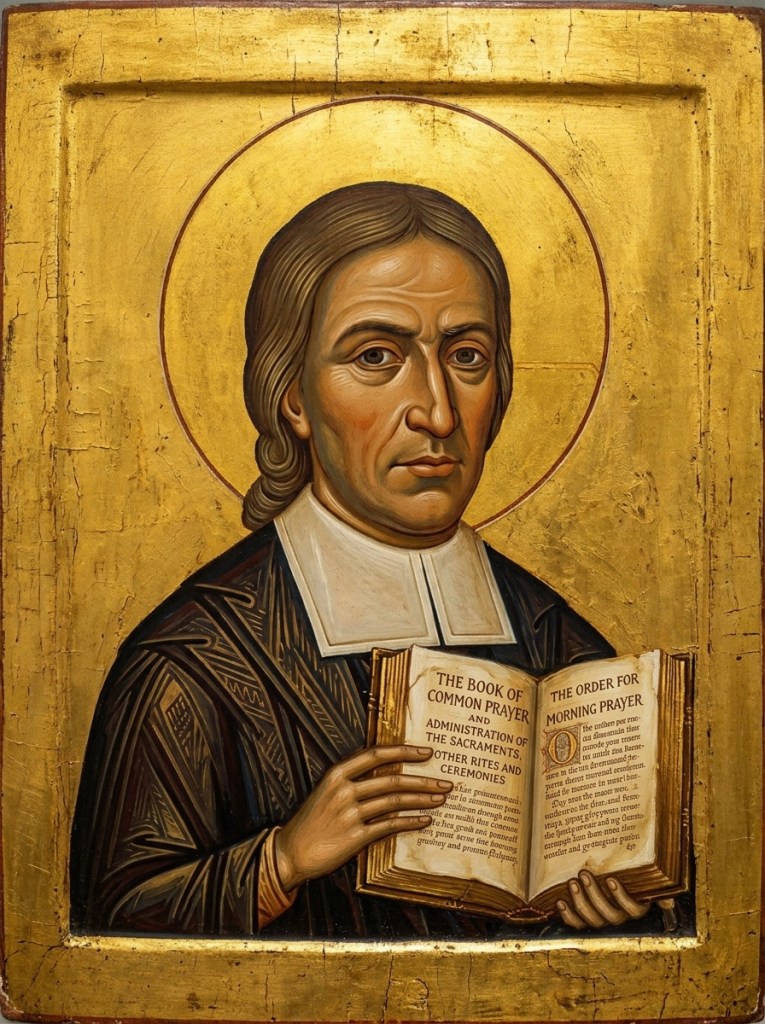
St John Cosin
Some links for me:
Source: Public Baptism of Infants
Dearly beloved, ye have brought this Child here to be baptized; ye have prayed that our Lord Jesus Christ would vouchsafe to receive him, to release him of his sins, to sanctify him with the Holy Ghost, to give him the kingdom of heaven and everlasting life. Ye have heard also that our Lord Jesus Christ hath promised in his Gospel, to grant all these things that ye have prayed for: which promise he, for his part, will most surely keep and perform. Wherefore, after this promise made by Christ, this Infant must also faithfully, for his part, promise by you that are his sureties, (until he come of age to take it upon himself,) that he will renounce the devil and all his works, and constantly believe God’s holy Word, and obediently keep his commandments.
I demand therefore,
Dost thou, in the name of this Child, renounce the devil and all his works, the vain pomp and glory of the world, with all covetous desires of the same, and the carnal desires of the flesh, so that thou wilt not follow nor be led by them?
Answer.I renounce them all.
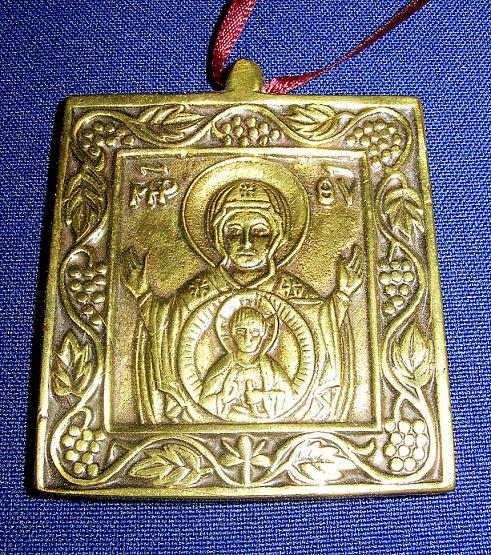
The following to be added to the end of Mattins and Evensong, after the Grace.
V/ Therefore the Lord himself shall give you a sign; Behold, a virgin shall conceive, and bear a son, and shall call his name Immanuel.
R/ Most Holy Theotokos, intercede for me
What do you think?
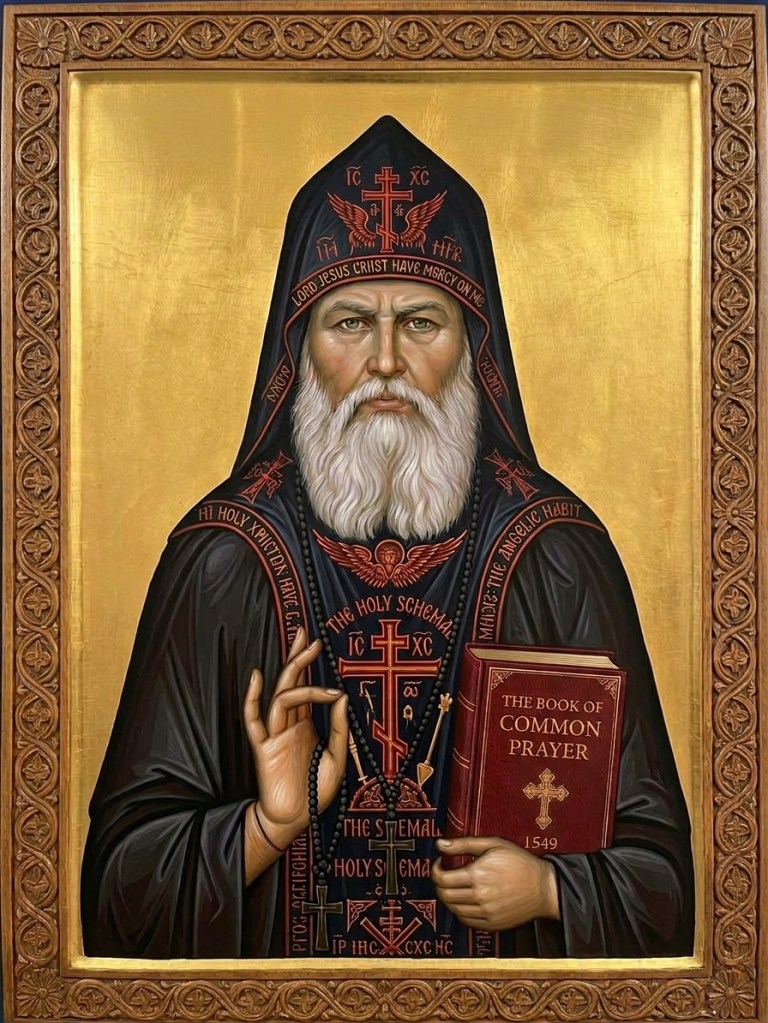
Playing with AI picture creator. Maybe more of a picture of how I would like to be see rather than actually me?!
Can you see a time when there are Schema Monks using a form of the Book of Common Prayer? 1549 or later?
Then shall the priest demaunde of the childe (which shalbe first Baptized) these questions blowing: first naming the childe, and saying.
N. Doest thou forsake the devill and all his workes?
Aunswere. I forsake them.
Minister. Doest thou forsake the vaine pompe, and glory of the worlde, with all the covetouse desyres of the same?
Aunswere. I forsake them.
Minister. Doest thou forsake the carnall desyres of the flesh, so that thou wilt not folowe, nor be ledde by them?
Aunswere. I forsake them.
… Let not him that eateth despise him that eateth not; and let not him which eateth not judge him that eateth: for God hath received him. Who art thou that judgest another man’s servant? to his own master he standeth or falleth. Yea, he shall be holden up: for God is able to make him stand. One man esteemeth one day above another: another esteemeth every day alike. Let every man be fully persuaded in his own mind. … But why dost thou judge thy brother? or why dost thou set at nought thy brother? for we shall all stand before the judgment seat of Christ. … So then every one of us shall give account of himself to God. … Hast thou faith? have it to thyself before God. Happy is he that condemneth not himself in that thing which he alloweth.
Mattins (Wednesday after Trinity 14) Reading: Romans 14
and …
Dost thou renounce the devil and all his works, the vain pomp and glory of the world, with all covetous desires of the same, and the carnal desires of the flesh, so that thou wilt not follow nor be led by them?
Public Baptism of such as are of Riper Years
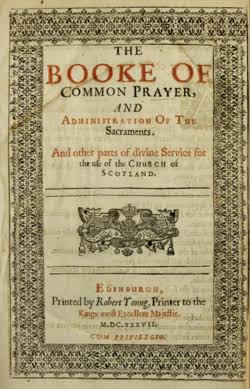
The question:
Council of Chalcedon
Canon IV.Let those who truly and sincerely lead the monastic life be counted worthy of becoming honour; but, forasmuch as certain persons using the pretext of monasticism bring confusion both upon the churches and into political affairs by going about promiscuously in the cities, and at the same time seeking to establish Monasteries for themselves; it is decreed that no one anywhere build or found a monastery or oratory contrary to the will of the bishop of the city; and that the monks in every city and district shall be subject to the bishop, and embrace a quiet course of life, and give themselves only to fasting and prayer, remaining permanently in the places in which they were set apart; and they shall meddle neither in ecclesiastical nor in secular affairs, nor leave their own monasteries to take part in such; unless, indeed, they should at any time through urgent necessity be appointed thereto by the bishop of the city. And no slave shall be received into any monastery to become a monk against the will of his master. And if any one shall transgress this our judgment, we have decreed that he shall be excommunicated, that the name of God be not blasphemed. But the bishop of the city must make the needful provision for the monasteries.
Henry R. Percival. The Seven Ecumenical Councils of the Undivided Church: their Canons and Dogmatic Decrees

