what has happened …

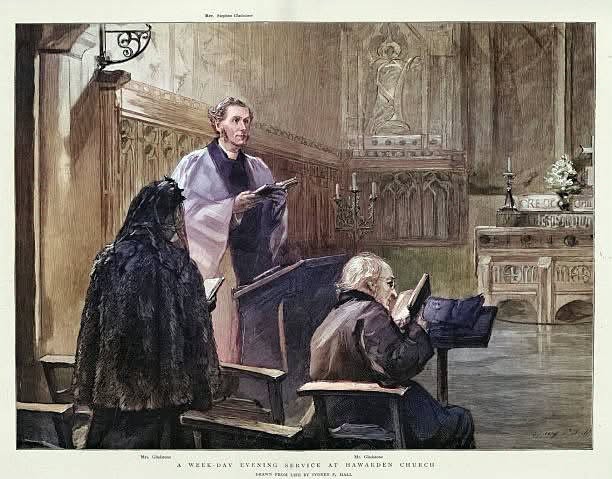
William Ewart Gladstone and his wife, at Mass, Anglican vicar, Hawarden Church, Vintage illustration 1890s, 19th Century

What happened to Mattins and Evensong? I am meeting Anglicans who have never attended either service. Or, who have only attended the modern version (euphemistically called Morning Prayer with little connection to the traditional shape). The modern church (oh, how I hate that term) is so quick to jump to “saying Mass” with traditional prayer services being an afterthought.

And what happened to “priest and people” together praying? Active participation means we have laypeople doing clergy jobs, and clergy dominating laypeople in their vocation.

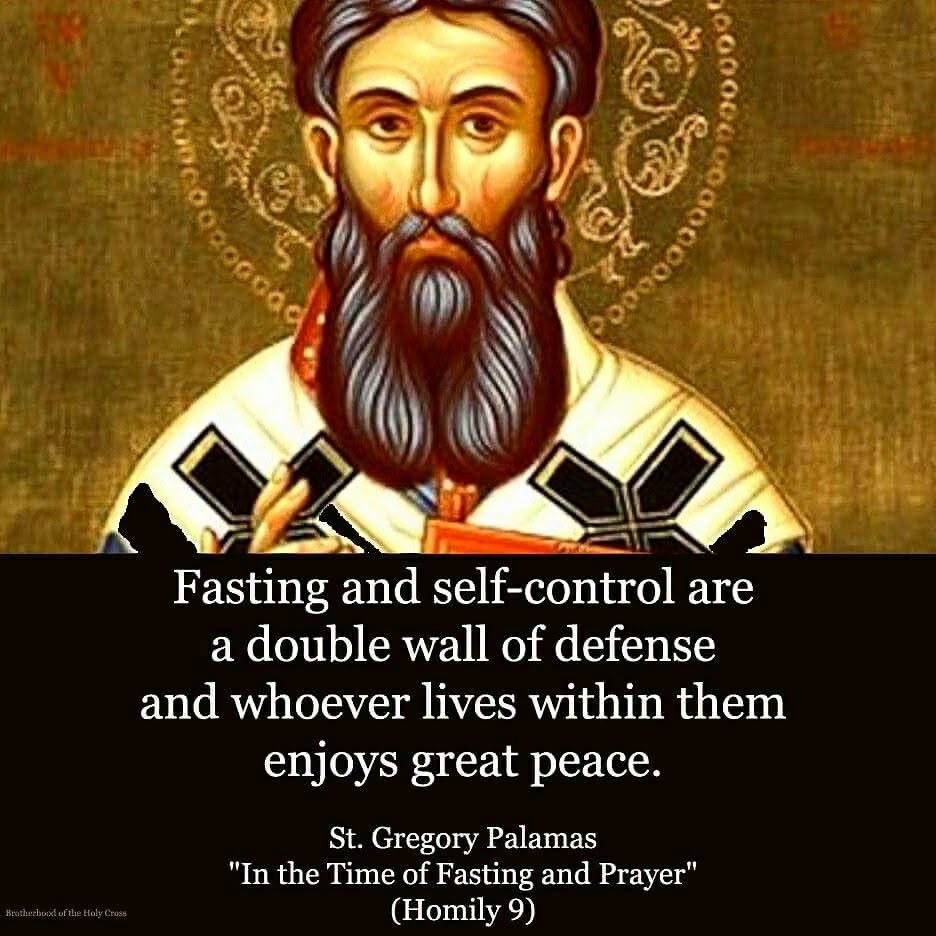
And what has happened to fasting?

Companion of New Skete

I am not a joiner! I did not join the “normal Anglo-Catholic” societies when I was a priest, nor any religious order as an oblate etc. But ….

It is intrinsic to ascetical theology to adapt itself to the contemporary situation, yet it can only evolve out of a living tradition with roots in the past.

English Spirituality, 13

I have been accepted as a Companion of the New Skete. And I am super excited. A connection to a living tradition while I remain within my own tradition. The beginning of a Prayer Book Ascetic.

“Faithful Remnants”

The Religious Societies of the seventeenth century offer most practical and important witness. Associated with Anthony Horneck’s ministry at the Savoy Chapel, London, and later with William Beveridge and Robert Nelson, these societies arose as an attempt – and a successful one – to practise the full teaching of the Church as enshrined in the Book of Common Prayer. The initial influence of these societies, these “Faithful Remnants”, was enormous, and history supports their sanity and zeal. The recitation of the daily Office was central to their activity, a priest-director was an essential part of the system, while works of charity towards the poor were a natural outcome. It is significant that their demise came when extraneous interests in politics and sociology overbalance the original Godward intention. For most of our modern parochial organizations, the writing on the wall could hardly be plainer.

English Spirituality, 266

… life of asceticism

The Questions and Answers.

Question : Why hast thou come hither, Brother, falling down before the holy Altar, and before this holy Assembly ?
Answer: I am desirous of the life of asceticism, Reverend Father.

Question : Dost thou desire to be deserving of the Angelical Habit, and to be ranked in the company of those who are living as Monks?
Answer: Yes, God helping me, Reverend Father.

The Priest:
Truly a good work and a blessed hast thou chosen ; but only, if thou dost also accomplish it. For good works are wrought with labour, and achieved with pain.

Question: Of thine own willing mind comest thou unto the Lord?
Answer: Yes, God helping me, Reverend Father.

Question : Not by any necessity, or constraint?
Answer : No, Reverend Father.

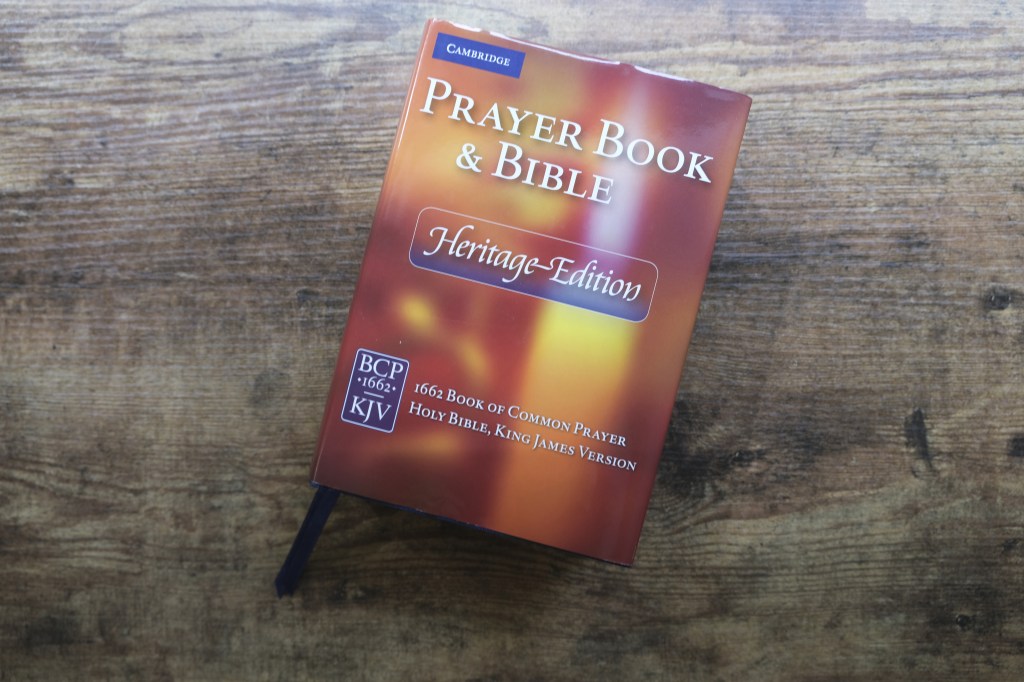
Heritage Edition

I purchased a Heritage Edition Prayer Book and Bible. (Like I need more BCPs and KJVs, and, yes, for my birthday). This is one of the best starter BCPs – with KJV! I like that I can take just one book everywhere. All I need is here. Very nice size! The KJV font is a little small but I can read when I remember to put on my glasses.

Yes, I have a 1928 Deposited Book (and it has been my constant companion). But this might be better!!! Very nice hand-feel!!! And the cost is a quarter of the 1928 with 1922 Lectionary.

ideal

If the monastic ideal is union with God through prayer, through humility, through obedience, through constant recognition of one’s sins, voluntary or involuntary, through a renunciation of the values of this world, through poverty, through chastity, through love for mankind and love for God, then is such an ideal Christian? For some the very raising of such a question may appear strange and foreign. But the history of Christianity, especially the new theological attitude that obtained as a result of the Reformation, forces such a question and demands a serious answer. If the monastic ideal is to attain a creative spiritual freedom, if the monastic ideal realizes that freedom is attainable only in God the Father, God the Son, and God the Holy Spirit, and if the monastic ideal asserts that to become a slave to God is ontologically and existentially the path to becoming free, the path in which humanity fully becomes human precisely because the created existence of humanity is contingent upon God, is by itself bordered on both sides by non-existence, then is such an ideal Christian? Is such an ideal Biblical—New Testamental? Or is this monastic ideal, as its opponents have claimed, a distortion of authentic Christianity, a slavery to mechanical “monkish” “works righteousness”?

The Ascetic Ideal and the New Testment: A Critique of the Theology of the Reformation
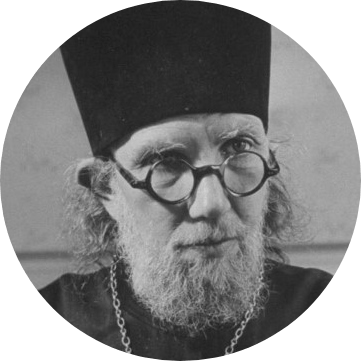
by Father George Florovsky