thomas, yes, thomas!

The conclusion of belief is no conclusion but a resolution, and thus doubt is excluded.

Philosophical Fragments
I woke in the night and the above quote came to mind. A little on the weird side, I agree, but it all came together.

I have been reading a book about Thomas a Kempis. In this book, there is a discussion on the origins of the Brethren of the Common Life and, especially, the founder, Geert Groote. Groote wrote “Resolutions and Intentions” which was like a Rule of Life but without any vows. And it was common practice in the Brethren for individuals to write such a document and not take religious vows in the traditional way.

The above now makes even more sense to me. Live life without vows or a Rule but live with a clear resolution. Allow life to be shaped by this resolution but make no show of it or put yourself under vows.

So, in the history of the church, there is a way to live a converted (religious) life as a layperson without entering a monastery.

And, as an aside, I really like SK’s side-step on doubt in the above quote!

Lent and me

I have been thinking about Lent – what to do this year? In my lifetime I think I have done all the traditional things: caffeine, alcohol, TV, music, soft drink, etc. And I do not want to give something up just for the “show of it” and then return to normal after Easter.

I have also been thinking about why I have been unable to maintain relationships in my life. I have many fallen friends with whom I am no longer in contact. My life is a field of broken relationships.

I think for Lent this year, I am going to self-censor. I am going to speak only when spoken to and then will speak only upbuilding things. Especially online – ok, I see the irony. Also, I am going to try to listen more (and read more which is my primary form of listening).

Anyway, happy Lent to you all!

transparency and Lent

The formula that describes the state of the self when despair is completely rooted out is this: in relating itself to itself and in willing to be itself, the self rests transparently in the power that established it.

Sickness unto Death

So Lent starts tomorrow. I have been thinking about it a lot in the last couple of days. Not because I have huge plans but rather I have been wondering what it means to me. Why bother with Lent?

I think the issues I have raised before – living in the past or anticipation of the future – are real issues in my spiritual life. So I am not surprised that they would come to mind when I think about Lent. But Lent cannot be about my past sins or my future reward! It must be about my relationship with Jesus now. So should I give up on Lenten disciplines? No! But I am going to look at them from a different angle.

Living for Jesus now! Sometimes I overbalance one way, sometimes another. Lent is a season for balance: to see what things draw me away from my centre. Or, to put it in a slightly Kierkegaardian fashion, what is stopping me from becoming a self – to become transparent before God.

So this Lent is about balance. It is also about prayer and silence. And it is about reading and sharing.

where to from here?

Therefore Christ also first and foremost wants to help every human being to become a self, requires this of [them] first and foremost, requires that [they], by repenting, become a self, in order then to draw [them] to himself. He wants to draw the human being to himself, but in order truly to draw [them] to himself he wants to draw [them] only as a free being to himself, that is, through a choice.

Practice in Christianity

I woke in the middle of the night and that quote came to mind. Besides the fact that I dream of Kierkegaard quotes, and talk to him in English in a coffee shop, which is super-weird, I think the above has something very important to say.

What is Jesus all about? Or, to put it another way, what is “salvation”? As I wrote yesterday, it is not about the past or the future. It is a right-now thing. So what is Jesus’ deepest desire for me right now?

Ok, I cannot work out what my deepest desire right now is so I doubt I can of another person. And I would not dare to say what Jesus desires. But if we take Kierkegaard’s quote seriously, and I think we should, it is about becoming a self – it is about becoming me. Yes, I cannot be a self without him! And that is the central proclamation of the community we call the Church. But becoming a self in Jesus involves my freedom and choices.

I am having issues with “me” at the moment. The above gives shape to come of my issues. And it points me back to Jesus. Jesus now for becoming “me”.

now?

In relation to the absolute, there is only one time, the present; for the person who is not contemporary with the absolute, it does not exist at all. And since Christ is the absolute it is easy to see that in relation to him there is only one situation, the situation of contemporaneity; the three, the seven, the fifteen, the seventeen, the eighteen hundred years make no difference at all; they do not change him, but neither do they reveal who he was, for who he is is revealed only to faith.

Practice in Christianity

I have been thinking about some of the monastic rules I have been reading. There is often a strong note of pentitence. And sometimes some talk of reward. The asceticism described in these rules is often in terms of “soul good, body evil” dualism. Or “suffering good because it wins forgiveness”.

Of course, all that is an oversimplification. But I have wondered how to live a rule of life in a monastic way without falling into those traps. Penitence (the past) or reward (the future) are nice but it is about living for Jesus now. The present moment! So it is about balance in the now to be fully open to Jesus.

self?

The self is a relation that relates itself to itself or is the relation’s relating itself to itself in the relation; the self is not the relation but is the relation’s relating itself to itself. A human being is a synthesis of the infinite and the finite, of the temporal and the eternal, of freedom and necessity, in short, a synthesis. A synthesis is a relation between two. Considered in this way, a human being is still not a self

Sickness unto Death, Hong 13

I think that is one of the first Kierkegaard quotes I ever read. Looking back now at how confused I was – still am – about what he means makes me wonder if I have progressed at all.

I have been thinking about Lent, the “religious life”, and being a self. They are all about “balance”. Finding a balance between the various forces that pull and push. Finding balance with those things that I have control over. Asceticism, in the traditional sense, is about finding balance in the physical world to focus exclusively on Jesus.

Anyway, not to find a definition of “religious life” that suits me!

risk?

Life in Religion is the ultimate wager on the existence of God. The church should always be engaged in doing things that make no sense if God does not exist.

Most Revd Justin Welby, Archbishop of Canterbury

The above is from the Foreword to the Anglican Religious Life Year Book, 2016-17. I suspect I have quoted it before.

I have been thinking about risk and paradox. Maybe we live in a world that tries to remove both? But both are required for faith. Unless we make faith simply a way of knowing without evidence, a religious epistemology that places knowledge above faith, faith needs risk and paradox.

solitary?

The terms Hermit and Solitary are often used interchangeably but for the purposes of the Handbook, the term ‘hermit’ refers to a member of a Religious Community and the term ‘solitary’ refers to one who is not a Religious.

A Handbook of the Religious Life, The Advisory Council for Religious Communities

So … the above is from the Church of Englabnd document, and there is an Australian version that is not as clear, indicating that people living a “vow of celibacy” can do so under a religious rule (hermit) or under a personal rule (solitary).

I think the term religious can be confusing. In a sense (but who am I to say this) the solitary is the modern form of an anchorite – a celibate/single layperson living alone under a rule. And that is how I use the term anchorite – a single layperson living under a personal rule inspired by the lived example of anchorites.

I have been thinking about the above a lot recently. Am I called to such a life? Especially with a few things that are going on in my life, am I called by God to embody a religious incognito type of spirituality within the context of a modern parish?

love the truth?

So here is a completely random idea: what if we were to stop talking about knowing the truth and start talking about loving the truth? Or, to put it in Christian terms, what if we were to stop talking about knowing Jesus and start talking about loving Jesus?

While I kinda understand the idea of knowing something, I think it has been drawn into a direction that is not helpful for our relationship with Jesus. It makes the relationship all about our head and then our heart. Let’s turn that around and make it about the heart exclusively. Let’s make it a human relationship rather than an intellectual.

I want to write about this more but I think this is a start!

new monasticism?

I have been reading a book that had moved me. Okay, that is not usual! It has made me glad and sad in equal measure.

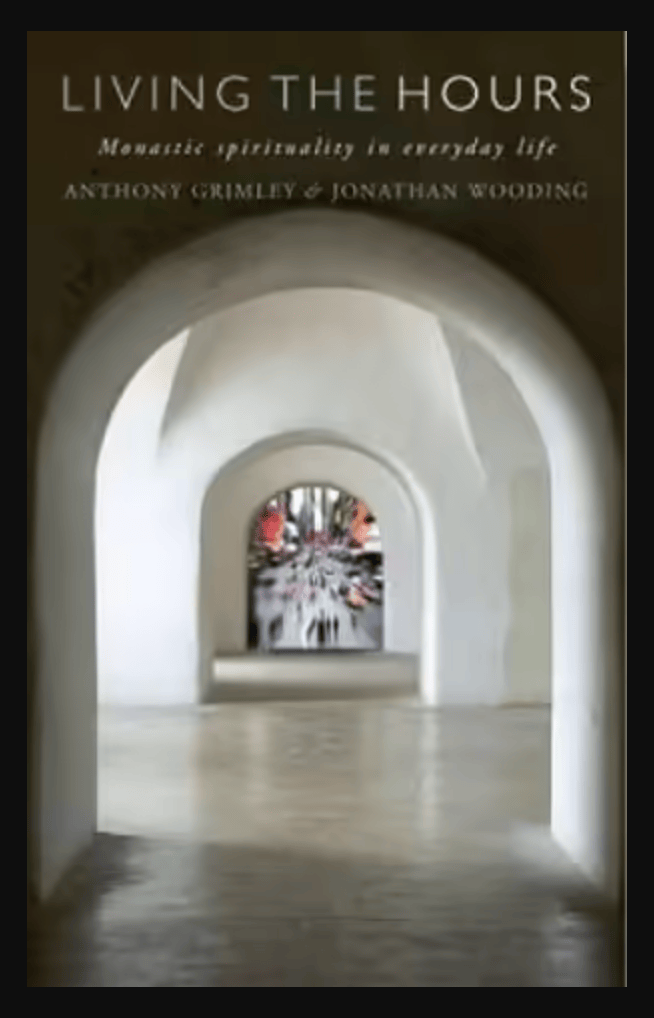
The book is Living the Hours: Monastic Spirituality in Everyday Life. The authors are, I think, involved with Monos which is the UK organisation for “new monasticism”.

So here are a couple of takeaway points from my reading so far:

  • New Monasticism – vocation verses vacation?
  • Four Pillars: Prayer, silence, balance, and study
  • Living a rule
  • Monasticism as the context for being human

It is an interesting read.