
I am not sure how I missed this during Advent! I love Wilder Adkins and his sound. Waiting was our Advent theme and it spoke to me in a number of different ways. And this song would have been nice for Advent. Oh well, better late then never.
Common Worship
This morning I had a decision: I am going to move to using Common Worship: Daily Prayer exclusively. Not going to change the world, not going to move anyone else! I have used Common Worship with the Australian Lectionary. I have purchased a copy of the lectionary from the Church of England and I will use that lectionary for my divine office.
Yes, not earth-shattering! And most likely very myopic. Yet the rhyme that Common Worship establishes with a four-fold office really suits me. And I am really not sure how I would survive without it – I often say Prayer During the Day in the car at work.
So … nothing happening here, just move on!
Silent night?
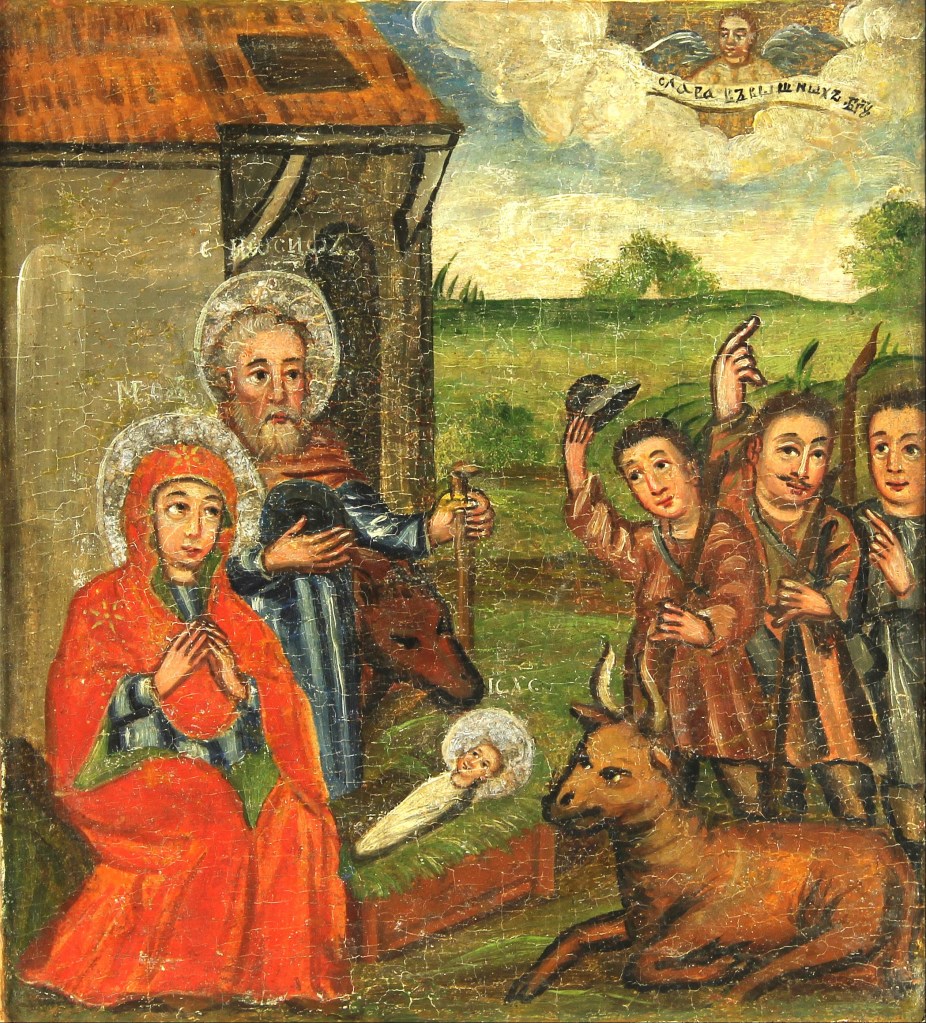
So Christmas has been and is now gone.
This year I have been struck by the people who received the message of the birth of Jesus – the shepherd. Alone, in the silence, in the wilderness, they receive the message of the angel that the Saviour is born. Away from everyday business, in the darkness, they are confronted by the reality that God’s love is embodied in the Baby.
We sing about it! But until this year I never really thought about the context. The shepherds, in the desert, are a precursor for the contemplative. In the silence of the wilderness of “me”, the contemplative meets a person – the embodied love of God! Like Jacob, the contemplative does not wrestle with God until they are alone with God.
So I have been thinking about various things in my life. I would like to create a context for contemplation. A context for Jesus alone. I struggle with an imperative to share the fruits of that contemplation – is it real? I have also been reading a book about the Brethren of the Common Life and a different book on Thomas à Kempis. Is there an imperative for inwardness that I have been called to within an “unusual framework”?
Anyway, I pray you have had a blessed Nativity of Our Lord.
Follow me (The Chosen)
One of many moving scenes from The Chosen.
Follow me and …
And Jesus said to them, “Follow me and I will make you fish for people.”
Mark 1:17
I have been thinking about the order of the above verse from Mark’s gospel. Jesus calls each individual to “follow”. And those who are “followers” He gives a “job”. The order is important!
I have been thinking about vocations in general and my particular vocation in the last two months. I need to be aware that my first “vocation” is to follow Jesus. That is my calling above and beyond anything. I desire Jesus alone! How that calling works itself out in my life – my particular vocation – is a different question (which is no less important to ponder).
I think my particular vocation has changed a couple of times in my life. I think all those vocations were real and given to me by God. Yet the one central vocation remains – “Follow me”. God uses my context, especially my new context, to show me how I am to live my “desire for Jesus alone”.
I find that distinction very helpful. My particular calling changes with context and age. But the main call Jesus makes on my life is always the same – “Follow me”.
asceticism
In the Medieval German rites for enclosure of an anchorite, the anchorite is given a crucifix with the words:
Take this image of the Crucified, whose suffering and death you shall always keep in your heart.

I was reading today about some of the ascetics of medieval anchorites – not eating, not sleeping, one even threw herself into fires. Also some of the desert parents! All of these sound really weird to us. But have we gone too far the other way and completely ignored asceticism. We are physical beings and we proclaim our faith using physical means.
And then I remembered the above from the German enclosure rites. We follow the one who sacrificed Himself on the cross. Julian of Norwich has a vision of Jesus on the cross. In a Carthusian cell there hangs only a crucifix.
So … let’s not throw out the baby with the bathwater (asceticism) and let’s remember whom we follow and let’s meditate on His cross.
objectivity?
Thus Christianity protests against all objectivity; it wants the subject to be infinitely concerned with itself.
Kierkegaard: Concluding Unscientific Postscript (Cambridge Texts in the History of Philosophy).
So I have tried to read a little Kierkegaard every day. I admit that Fear and Trembling always gets me thinking (and desiring).
Yet I have also been reading Concluding Unscientific Postscript. And the above quote has struck me as something very relevant. In a world that elevates objectivity (and denigrates passion), what is the role of Christianity? Kierkegaard would say that it is this very paradoxical role that defines Christianity. Some within Christendom have adopted the objective approach and have created a dispassionate version of Christianity where reason is elevated over faith. In the process, humanity is reduced to being a “reasonable animal” and “me” is reduced to the sum of my parts.
I do not think we need to surrender objective truth. I am simply thinking that we cannot ignore the subject individual who related to the objective truth. But, I am no philosopher!
solitude
… their purpose is no longer being to arouse desire but to gratify it.
Alred of Rievaulx, Rule of Life for a Recluse
I remembered the above quote as I was reading today. I think Alred is thinking in terms of speech – especially for those who have chosen to live a life as an anchorite – but I think it equally applies to reading.
When people say that they like to read I often wonder what they mean?! I think there is a strong desire for escapism in reading. It can take you to faraway places and to situations very different from the one you find yourself. Reading can also be used to pass time, to see what the rich and famous are doing, or to catch up on the latest gossip. I wonder what the “end” of such reading is?
I think when I think of reading I am thinking of something very different. Reading is about “arousing desire” for Jesus. It is not always the Bible or the Prayer Book that arouses that desire. Traditional literature on spirituality, or modern, can move the heart as well as the head. I often read only a few words of a good book and allow them to float around my head. (Yes, plenty of space for floating!)
The religious life can be very self-indulgent. Solitude is not the absence of people – a religious form of misanthropy – but being alone with God. Solitude is a desire to be alone with Jesus. Solitude is a luxury to enjoy the presence of Jesus, to live in the Son, to sit and listen to Jesus.
random comments

The past is like the internet: there is always someone who agrees with you.
I escape into books. I prefer people of old (in books) to most modern people. But books can also frustrate and annoy me.
So I have been reading: Anglicanism: A Reformed Catholic Tradition. The book may have many merits. Yet it has illustrated for me that the way we see today influences the way we see the past.
The book tries to trace some of the theological seeds to Anglicanism in the pre-Reformation period. Not an uncommon way to see Anglicanism. Yet, the book does not mention any of the people who not only formed English spirituality but also the English language. The book does not mention Julian of Norwich, Richard Rolle, Walter Hilton, or Margery Kempe. It does not mention The Cloud of Unknowning or the monastic tradition. It certainly does not mention the involvement of the Carthusian in English spirituality and theology. It mentions Anselm of Canterbury who, while he did work in England as Archbishop of Canterbury, knew no English and was an Italian by birth.
So there is one random observation!
so …
Yesterday I saw a relative on the way home from the doctor and … this morning I had to stand in line for a Covid test. My first Covid test. So I am in isolation for 7 days with another test on day 6.
Somehow I think this is a blessing. Time to breathe, pray, and step back. I started my new medication today so I am glad for a little space for it to begin working.
It has not escaped my notice that when life gets tough, I seek solitude and silence. Work, especially in the afternoon, is extremely loud. It is sensory overload!
So I am simply waiting for things to unfold.

