fellowship?

Christianly, struggling is always done by single individuals, because spirit is precisely this, that everyone is an individual before God, that “fellowship” is a lower category than “the single individual,” which everyone can and should be. And even if the individuals were in the thousands and as such struggled jointly, Christianly understood each individual is struggling, besides jointly with the others, also within himself, and must as a single individual give an accounting on judgment day, when his life as an individual will be examined.

Practice in Christianity

I have been thinking about the above quote, especially, ”fellowship” is a lower category than “the single individual”. A number of the books I have been reading speak of monasticism in terms of “community”. I feel community is important but is it the “prime category”? It is the paradox of faith in Jesus: I learn from the community but I am alone before God.

Anyway …
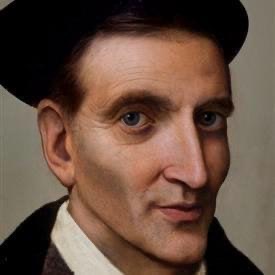
thomas, yes, thomas!

The conclusion of belief is no conclusion but a resolution, and thus doubt is excluded.

Philosophical Fragments

I woke in the night and the above quote came to mind. A little on the weird side, I agree, but it all came together.

I have been reading a book about Thomas a Kempis. In this book, there is a discussion on the origins of the Brethren of the Common Life and, especially, the founder, Geert Groote. Groote wrote “Resolutions and Intentions” which was like a Rule of Life but without any vows. And it was common practice in the Brethren for individuals to write such a document and not take religious vows in the traditional way.

The above now makes even more sense to me. Live life without vows or a Rule but live with a clear resolution. Allow life to be shaped by this resolution but make no show of it or put yourself under vows.

So, in the history of the church, there is a way to live a converted (religious) life as a layperson without entering a monastery.

And, as an aside, I really like SK’s side-step on doubt in the above quote!

transparency and Lent

The formula that describes the state of the self when despair is completely rooted out is this: in relating itself to itself and in willing to be itself, the self rests transparently in the power that established it.

Sickness unto Death

So Lent starts tomorrow. I have been thinking about it a lot in the last couple of days. Not because I have huge plans but rather I have been wondering what it means to me. Why bother with Lent?

I think the issues I have raised before – living in the past or anticipation of the future – are real issues in my spiritual life. So I am not surprised that they would come to mind when I think about Lent. But Lent cannot be about my past sins or my future reward! It must be about my relationship with Jesus now. So should I give up on Lenten disciplines? No! But I am going to look at them from a different angle.

Living for Jesus now! Sometimes I overbalance one way, sometimes another. Lent is a season for balance: to see what things draw me away from my centre. Or, to put it in a slightly Kierkegaardian fashion, what is stopping me from becoming a self – to become transparent before God.

So this Lent is about balance. It is also about prayer and silence. And it is about reading and sharing.

where to from here?

Therefore Christ also first and foremost wants to help every human being to become a self, requires this of [them] first and foremost, requires that [they], by repenting, become a self, in order then to draw [them] to himself. He wants to draw the human being to himself, but in order truly to draw [them] to himself he wants to draw [them] only as a free being to himself, that is, through a choice.

Practice in Christianity

I woke in the middle of the night and that quote came to mind. Besides the fact that I dream of Kierkegaard quotes, and talk to him in English in a coffee shop, which is super-weird, I think the above has something very important to say.

What is Jesus all about? Or, to put it another way, what is “salvation”? As I wrote yesterday, it is not about the past or the future. It is a right-now thing. So what is Jesus’ deepest desire for me right now?

Ok, I cannot work out what my deepest desire right now is so I doubt I can of another person. And I would not dare to say what Jesus desires. But if we take Kierkegaard’s quote seriously, and I think we should, it is about becoming a self – it is about becoming me. Yes, I cannot be a self without him! And that is the central proclamation of the community we call the Church. But becoming a self in Jesus involves my freedom and choices.

I am having issues with “me” at the moment. The above gives shape to come of my issues. And it points me back to Jesus. Jesus now for becoming “me”.

now?

In relation to the absolute, there is only one time, the present; for the person who is not contemporary with the absolute, it does not exist at all. And since Christ is the absolute it is easy to see that in relation to him there is only one situation, the situation of contemporaneity; the three, the seven, the fifteen, the seventeen, the eighteen hundred years make no difference at all; they do not change him, but neither do they reveal who he was, for who he is is revealed only to faith.

Practice in Christianity

I have been thinking about some of the monastic rules I have been reading. There is often a strong note of pentitence. And sometimes some talk of reward. The asceticism described in these rules is often in terms of “soul good, body evil” dualism. Or “suffering good because it wins forgiveness”.

Of course, all that is an oversimplification. But I have wondered how to live a rule of life in a monastic way without falling into those traps. Penitence (the past) or reward (the future) are nice but it is about living for Jesus now. The present moment! So it is about balance in the now to be fully open to Jesus.

risk?

Life in Religion is the ultimate wager on the existence of God. The church should always be engaged in doing things that make no sense if God does not exist.

Most Revd Justin Welby, Archbishop of Canterbury

The above is from the Foreword to the Anglican Religious Life Year Book, 2016-17. I suspect I have quoted it before.

I have been thinking about risk and paradox. Maybe we live in a world that tries to remove both? But both are required for faith. Unless we make faith simply a way of knowing without evidence, a religious epistemology that places knowledge above faith, faith needs risk and paradox.

new monasticism?

I have been reading a book that had moved me. Okay, that is not usual! It has made me glad and sad in equal measure.

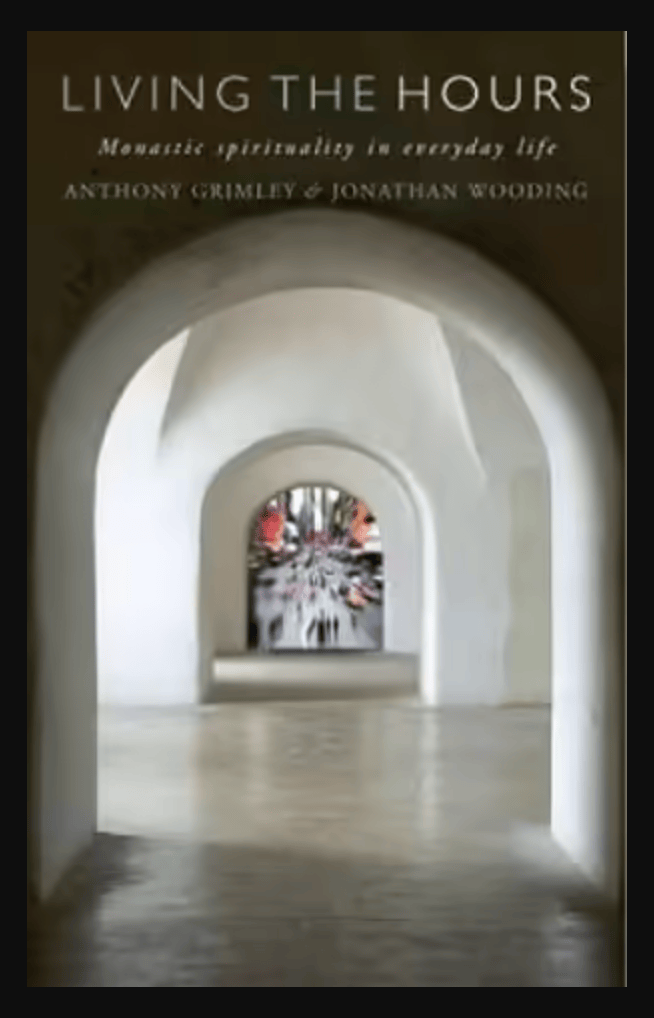
The book is Living the Hours: Monastic Spirituality in Everyday Life. The authors are, I think, involved with Monos which is the UK organisation for “new monasticism”.

So here are a couple of takeaway points from my reading so far:

  • New Monasticism – vocation verses vacation?
  • Four Pillars: Prayer, silence, balance, and study
  • Living a rule
  • Monasticism as the context for being human

It is an interesting read.

rule of life?

I have been thinking of reworking my rule of life. I think it needs to be more describtive rather than prescriptive. I think it needs to be less like rules of old and more like something I can live today.

I have also been reading an article by David Law on Kierkegaard’s view on monasticism. It still amazes me that as a Lutheran in Denmark, who would have had little exposure to monasticism, Kierkegaard spends a lot of time writing about it in his Journals and in other writings. I think it shows that monasticism does offer a challenge and, as the Archbishop of Canterbury has said, is the ultimate wager on God.

Anyway, I was reading the ACARLA (Advisory Council for Anglican Religious Life in Australia) website yesterday before our prayer group. And I read this:

Another form of consecrated life is that of living as a consecrated single person. This is essentially a “hidden life” – without any distinct dress or title.

And I thought of this quote from Kierkegaard:

[the individual] is incognito, but [their] incognito consists precisely in looking just like everyone else.

Kierkegaard writes that within the context of his discussion of monasticism in Concluding Unscientific Postscript. (I have written about it before.) Maybe he is onto something?!

Anyway, I might rework my rule of life today.

experience?

To be honest I only know very little about a very small circle. One of the people I have heard about but never read is Karl Barth. The book I have been reading looks at Barth’s thoughts on monasticism. I will admit that reading it makes me glad to be an Anglican! But I was struck by this:

In Barth’s understanding, Tersteegen’s faith grew “not from confession to experience, but from experience to confession,” which is “the way of self-denial”.

Gerhard Terteegen was a pietist who influenced both Barth and Kierkegaard. So the above quote speaks even more to me.

Maybe a more Kierkegaardian way of putting that is to speak about “resolution preceding conclusions”. Theology is a systematic way of looking at the experience of faith – in Scripture and Tradition – and trying to see themes. But it is the experience that establishes the relationship.

All of that made me wonder: can a heretic be saved? Can a Christian who has experienced the love of God in Jesus be a heretic? Or, to put it a completely different way, can “doctrine save”?

So the answer to the question, that was not asked, is I need to read more!

Regina or the cell?

So perhaps truth could be found by withdrawing from the world. Kierkegaard thought about seeking the silence of the monastery; Copenhagen’s Franciscan friary was dissolved by reformers in 1530, but he could at least try to renounce the idle chatter of the university, which seemed to him just another strain of gossip from the marketplace, only more deluded in its lofty aspirations.

Carlisle, Clare. Philosopher of the Heart

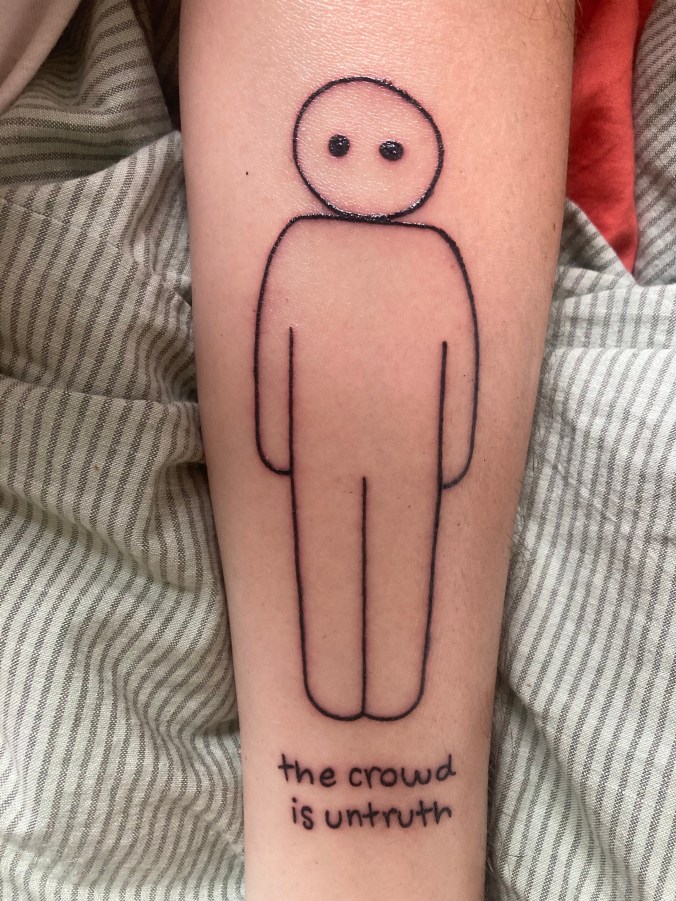
I read the above as I was waiting for my tattoo. I have never heard any suggestion that Kierkegaard wanted to enter religious life. I have often wondered, however, how a 19th century Lutheran had so much information on monasticism and felt the need to write about it.

I like the way Kierkegaard writes! I like what he writes about! I like his conclusions! And, I think, I really like him as a person. His struggles are human. In some ways, I feel the same about Merton’s “love affair”. Rather than making him look like an apostate monk, it affirms him as a human being.

So being human is about living in the paradox of choice. The choice for Kierkegaard – the paradox of choice – was either a life with Regina or withdrawing into the silence of religion. He choose the middle ground – the single life in the world dedicated wholly to Jesus. But he remains in love with Regina. Maybe what Kierkegaard did was “create” a new form of monasticism? One in which Jesus is the only reason and only motivation? A secret monasticism, without show or display, an undercover monk, by simply being completely human.